
No hay productos en el carrito.
AI in Accounting: Autonomous Agents For Finance Team

Organizations implementing these systems experience significant improvements in three critical areas that directly impact their bottom line and market position. Change Management Frameworkaddresses employee concerns and resistance to automation implementation. Successful automation projects include comprehensive training programs, clear communication about job role changes, and opportunities for skill development.
Benefits of Implementing Autonomous AI Agents in Business Process Automation
- These systems handle routine claims from submission to settlement without human intervention.
- Track total time spent on routine financial activities including data entry, reconciliation, and report compilation.
- Otto automatically tracks material costs through production workflows, allocates overhead based on actual resource consumption, and calculates standard cost variances without manual intervention.
- For example, in fraud detection, AI can initially assist human analysts by flagging potential anomalies for review, rather than making final decisions immediately.
- Specialized AI automation solutions emerge for specific industry requirements, addressing unique challenges and regulatory constraints.
This availability reduces customer wait times from hours to seconds while freeing human agents to handle complex issues requiring empathy and problem-solving skills. Quality Metricsmeasure the accuracy and consistency of automated processes compared to manual operations. Organizations monitor error rates, compliance adherence, and output quality to ensure automation systems meet performance standards. Automated systems typically achieve 95-99% accuracy rates while maintaining consistent quality across high-volume operations.
What is autonomous accounting?
In the era of digital transformation, business process automation has become essential for organizations aiming to enhance efficiency and remain competitive. Simply put, it’s the use of technology to execute recurring tasks or processes in a business where manual effort can be replaced. This streamlines workflows, increases efficiency, reduces errors, and lowers operational costs.
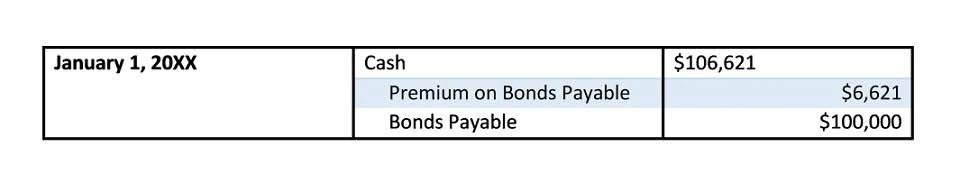
Autonomous Function: Examples in Financial Processes
AI automation systems must maintain security protocols while adapting to evolving threat landscapes. Financial institutions monitor AI-powered fraud detection systems balance sheet for both accuracy and compliance with regulatory requirements. Healthcare organizations ensure AI automation maintains patient privacy while improving operational efficiency.
AI Agents for Project Management & Coordination
Transitioning to autonomous accounting isn’t just about adopting new technology; it’s about embracing a mindset of innovation and charting a clear path forward. Autonomous payments platforms offer a range of benefits for businesses when it comes to paying suppliers and affiliates. By automating the payment process, businesses can streamline their accounts payable operations, reducing the time and resources required to manually process invoices and initiate payments. This increased efficiency translates into faster payment cycles, allowing businesses to optimize their working capital and maintain better control over their cash flow. One of the key advantages of autonomous payments platforms is their ability to integrate with various workforce management systems and payroll solutions. This integration allows or seamless data exchange, eliminating the need for manual data entry and reducing the risk of errors.
- From marketing to sales and HR to finance, these advanced AI systems adapt and orchestrate tasks without any human interference.
- Financial institutions using automated compliance monitoring detect violations faster and reduce penalty risks through continuous monitoring systems.
- Proactive Support Solutionssuch as Moveworks identify potential issues before customers report them.
- Leaders can further redefine employee evaluation programs to incorporate incentives that could drive employees to embrace financial autonomy.
- The software extracts relevant data, categorizes expenses according to company policy, flags exceptions, and automatically routes reports through appropriate approval channels.
- By consolidating all payment activities into a centralized platform, businesses gain a comprehensive view of their financial transactions, enabling data-driven decision-making and streamlined auditing processes.
- Start with a high-volume but low-risk process such as recurring entries or reconciliation, pilot the agent, review results and then expand incrementally.
Impact on finance team roles and strategy
Often, when it comes to technology implementation, CFOs are not using the solutions themselves. For example, the CFO of a company might not actually be using an autonomous account reconciliation software; the users would be the accounting team. However, CFOs especially need to be forerunners and display their technical knowledge regarding autonomous finance to inspire employees so that they can embrace technological advancements.
- The ongoing savings multiply as businesses grow, unlike the proportional headcount increases required to handle rising transaction volumes.
- Manufacturing organizations with legacy equipment need automation platforms supporting industrial communication protocols like OPC-UA or Modbus.
- AI algorithms identify deals at risk of stalling, suggest optimal pricing strategies, and recommend next steps for advancing opportunities.
- The technology has immense potential to enhance transparency, streamline processes by removing intermediaries, and increase security when it comes to financial transactions and data.
- Dashboards update in real time, showing P&L, balance sheet, cash flow, KPIs—all powered by the autonomous accounting core, enabling decision-makers to act faster.
- Organizations track processing times, accuracy rates, and resource consumption before implementing automation tools.
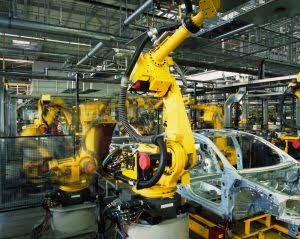
AI systems review resumes, match candidates to job requirements, and rank applicants based on qualification scores. These platforms reduce time-to-hire by automating initial screening processes and identifying top candidates quickly. Deal Management Systemsprovide predictive insights for pipeline management by analyzing historical sales data and current deal characteristics. AI algorithms identify deals at risk of stalling, suggest optimal pricing strategies, and recommend next steps for advancing opportunities. These systems increase deal closure rates by providing sales teams with data-driven recommendations. Customer feedback analysis through natural language processing provides actionable insights for service improvements.
How can businesses overcome employee resistance to AI automation?
Boeing uses machine learning algorithms to inspect aircraft components, detecting microscopic defects that human inspectors might miss. These systems maintain the same level of scrutiny throughout 8-hour shifts Cash Flow Statement without fatigue-related accuracy degradation, ensuring every component meets safety standards. Bank of America’s AI systems detect and prevent fraudulent transactions with 99.7% accuracy, reducing false positives by 60% compared to rule-based systems. This precision prevents legitimate transactions from being blocked while catching actual fraud attempts that would otherwise result in financial losses. Google’s DeepMind AI reduced cooling costs in data centers by 40% through real-time temperature and humidity adjustments. Manufacturing plants implementing similar energy management systems report 20-30% reductions in utility expenses while maintaining production output levels.
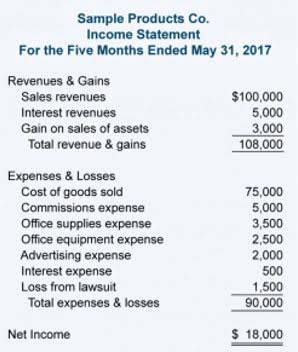
Organizations that seize the agentic AI opportunity now can move beyond disruption management and recast autonomous accounting supply chain operations as an engine for growth, differentiation, and innovation. Artificial intelligence for IT operations, or AIOps, uses AI and ML technologies to enhance and automate IT operations. AIOps is designed to improve the efficiency, performance, and reliability of IT systems by analyzing massive amounts of data and extracting insight faster than human IT teams can. Autonomic IT is a broader concept that utilizes AIOps to help manage and regulate IT systems with minimal human intervention. However, traditional approaches to IT management involve tools and processes that can’t keep pace with the speed of change in modern IT systems. They also require considerable manual intervention from IT staff while failing to offer guidance when issues arise.